


When Should Rocklin Adults See a Dentist for a Loose Tooth?
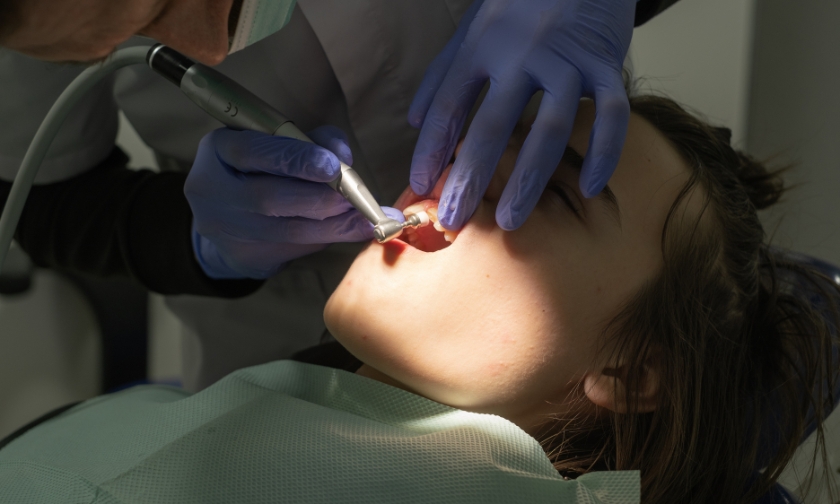
A loose tooth is one of those dental findings that adults often don’t know how to interpret. Children expect their teeth to wobble — it’s a rite of passage. For adults, the experience is unsettling precisely because there’s no innocent explanation for it. A permanent tooth that moves isn’t supposed to. And yet it’s something people sometimes sit on for weeks, hoping it stabilizes on its own.
It very rarely does. A loose adult tooth is almost always a sign that something structural has changed — the supporting bone, the periodontal ligament, or both — and that something needs clinical attention before the situation advances. If you’ve been searching for a dentist near me in Rocklin, CA, and this is what brought you here, here’s what you need to know.
Why Adult Teeth Become Loose
The stability of a tooth depends on two things: the health of the bone surrounding it, and the integrity of the periodontal ligament — the fibrous tissue that anchors the tooth root to the alveolar bone. Compromise either one significantly enough, and the tooth begins to move. Several distinct conditions can bring that about.
Advanced Periodontal Disease
This is the most common reason adults experience tooth mobility, and it’s the one most often missed because gum disease is famously quiet in its early stages. By the time a tooth begins to feel loose, the infection has typically been active long enough to cause measurable bone loss around the affected root. According to the CDC, nearly half of American adults over 30 have some form of periodontal disease, and in its advanced form, periodontitis destroys the bone that holds teeth in place.
The tricky part is that bone loss is irreversible. Treatment can stop the progression and preserve what remains, but it can’t rebuild what’s already gone. That’s the core reason prompt evaluation matters — the difference between treating the condition early versus late is often the difference between keeping the tooth and losing it.
Trauma
A blow to the mouth from a fall, a sports collision, a car accident, or any direct impact can loosen a tooth even when there’s no visible fracture or obvious external damage. The force disrupts the periodontal ligament, and the tooth shifts within its socket. Trauma-related looseness sometimes resolves as the ligament heals, but it also sometimes signals a root fracture or underlying bone damage that only imaging can confirm.
Rocklin has an active outdoor community — hiking, cycling, and youth sports are all popular across Placer County. Dental trauma from recreational activity is more common than most people track. If you’ve undergone something like this, it’s worth getting evaluated promptly under a dentist you find during a rigorous search for a ‘dentist near me’.
Bruxism
Chronic teeth grinding generates repetitive, excessive force against the teeth and their supporting structures. Over time, that force can stress the periodontal ligament to the point where teeth begin to feel slightly mobile, particularly first thing in the morning after a night of grinding. Unlike periodontitis-related mobility, bruxism-related looseness is often more generalized — affecting multiple teeth rather than a single one — and the teeth tend to stabilize once the grinding is controlled.
Bone Loss from Osteoporosis
Osteoporosis reduces bone density throughout the body, and the jawbone is not exempt. Research has found associations between osteoporosis and increased tooth loss, though the relationship is more indirect than with gum disease — osteoporosis doesn’t cause gum disease, but it reduces the jawbone’s resilience and its ability to support teeth under normal chewing forces. Adults managing osteoporosis, particularly those on bisphosphonate medications, should keep their dental team informed, as these medications affect how the jawbone responds to treatment.
A Dental Abscess
A periapical abscess is an infection at the root tip — it can destroy surrounding bone as it spreads, creating a pocket of dead tissue that undermines tooth support. The tooth may feel loose, tender to pressure, or painful when biting. In some cases, there’s visible swelling or a fistula (a small drainage point on the gum). Abscesses don’t resolve on their own and can spread beyond the jaw if left untreated.
What to Do and Not Do While You Wait for Your Appointment
Once you notice a tooth is loose, a few practical steps help protect it until you’re seen:
- Avoid biting or chewing on that side of your mouth — additional stress can worsen mobility and increase the risk of the tooth displacing further
- Don’t attempt to push the tooth back into position or stabilize it yourself — any movement should be assessed first
- Stick to soft foods that don’t require significant bite force
- If the tooth was knocked loose by trauma and is significantly displaced, call the dental office immediately — this is time-sensitive
One thing worth knowing: a tooth that feels slightly loose isn’t necessarily lost. The outcome depends heavily on the cause and how quickly treatment begins.
How the Evaluation and Diagnosis Work
At Discover Dental Rocklin, evaluating a loose tooth starts with understanding the full clinical picture. That means a periodontal assessment (probing depths around the affected tooth and adjacent teeth), a visual assessment of gum tissue health, and an evaluation of bite and occlusal function. Radiographic imaging is almost always part of the process, as bone levels around the root aren’t visible clinically.
From that baseline, the probable cause becomes clearer, and a treatment path follows logically. Periodontal disease is treated with scaling and root planing to clean bacterial deposits from root surfaces. Trauma is stabilized and monitored, sometimes with splinting to adjacent teeth. Bruxism is managed with a custom occlusal guard. An abscess requires drainage and, depending on the tooth’s condition, either root canal treatment or extraction.
The specifics vary, but the pattern is consistent: diagnosis first, then a treatment recommendation matched to what’s actually causing the problem.
A Loose Tooth in Adulthood Needs a Thorough Evaluation
Waiting to see if a loose adult tooth resolves on its own is rarely a strategy that works out. The conditions that cause tooth mobility tend to progress without intervention, and catching them earlier consistently results in better outcomes and more preserved tooth structure.
Discover Dental Rocklin is a Daily Dentists registered dental office near Rocklin for adults with this oral concern. Book your evaluation online or call the office directly and find out what’s going on and what it takes to address it properly.